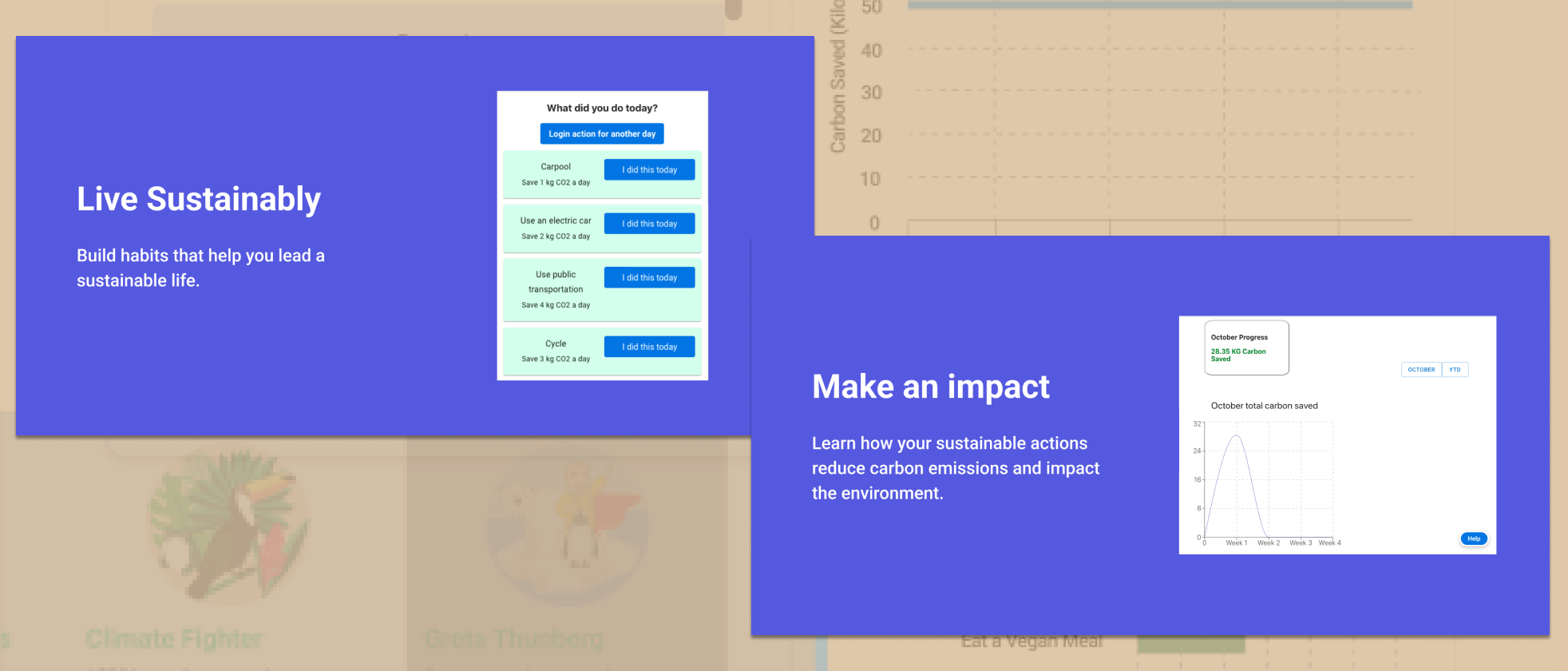
Modernizing Expense Management at Scale
My Role:
LXD – End-to-End
Audience:
Company-Wide Employees
Tools:
Tango | Simpplr (Current)
Duration:
3 months
OVERVIEW
Sunrun, a leading national solar company, with more than 10,000 employees and contractors across the U.S., recognized the need to modernize its internal expense management system. The existing tool, Coupa, had become inefficient and unreliable.
To maintain operational excellence and employee satisfaction, the organization made the strategic decision to transition to Oracle Expenses, a more scalable, cloud-based solution.
Accounts Payable placed a strong focus on ensuring the transition was smooth, user-friendly, and supported by effective change management.
The Challenge
Switching expense platforms at scale:
ADDRESSING
- Lack of clarity around rollout timing and communication
- Concerns about ease of use and feature parity across devices
- Inconsistent functionality between mobile and desktop
- Delayed reimbursements and system reliability concerns
- Limited user guidance or training resources
- Resistance from users unfamiliar with the new tool
“Limited training and unfamiliarity with the new tool leads to user resistance and confusion.”
Accounts Payable highlighted the urgent need for a clear change management strategy to support adoption, ensure compliance, and rebuild trust in the process.
Goals
To course-correct, Accounts Payable set clear targets:
Improve accuracy and timeliness of reimbursements
Ensure usability across both desktop and mobile platforms
Deliver engaging, easy-to-follow training content
Achieve high user adoption and trust in the new process
The Solution
To ensure a smooth transition to Oracle Expenses, a cross-functional team—comprising project managers, developers, and Accounts Payable subject matter experts—came together to create a robust change management and training plan. This approach focused on clarity, usability, and ongoing improvement.
Key deliverables included:
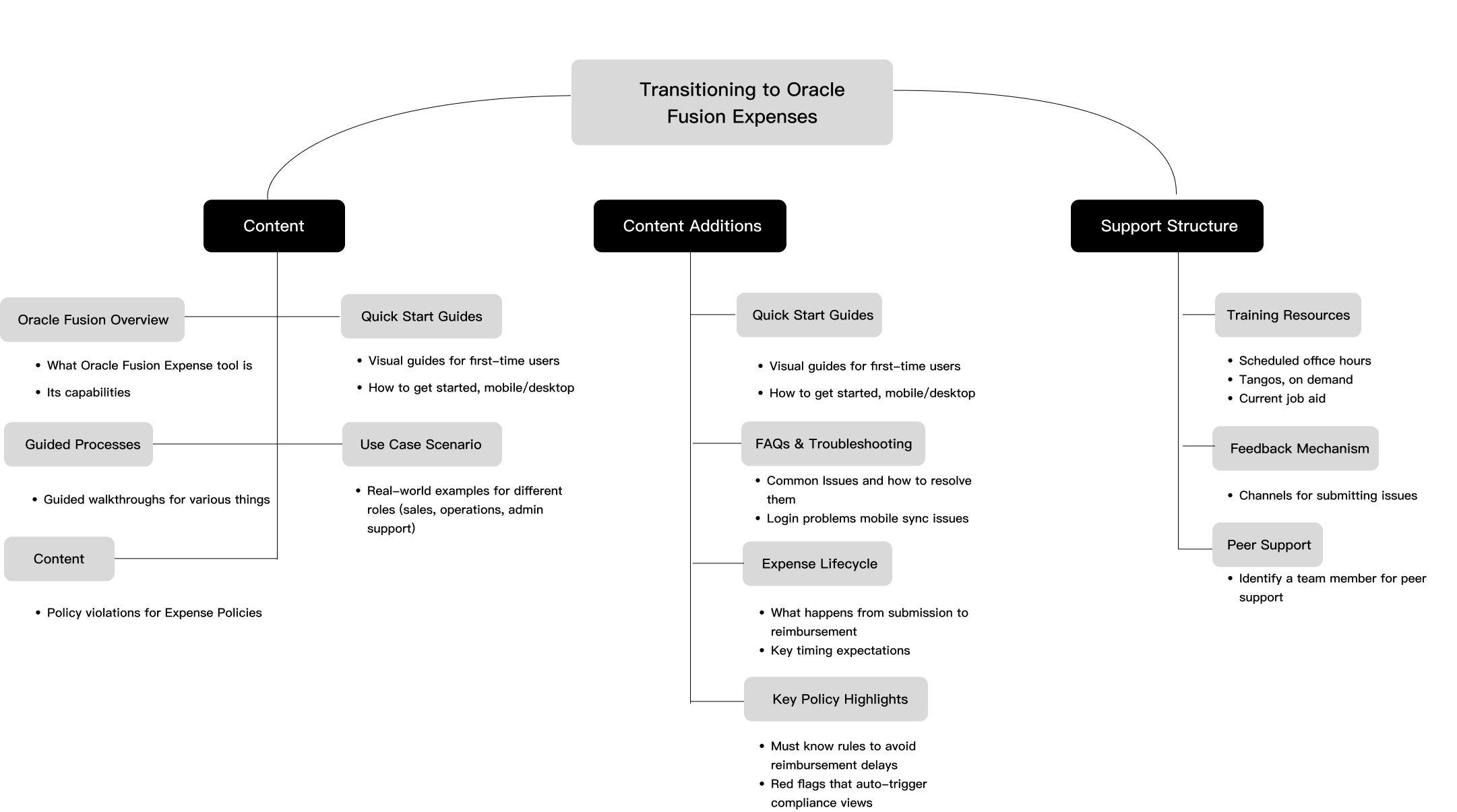
A clear overview of Oracle Expenses and its benefits to set expectations and build awareness
Guided walkthroughs created with Tango, covering essential tasks like submitting expenses and creating reports
Embedded policy and compliance guidance to help users stay aligned with reimbursement rules
A feedback loop for continuous improvement, allowing the team to quickly address issues, fix bugs, and refine the experience based on real-time user input
Tango's (Walkthroughs)
0
+
Current Article
1
* Current: An intranet hub for personalized, role-based updates—keeps employees informed and engaged.
Mirolearning
View Current Article
Tango
Guided how-to aid for Creating an Expense Report
This collaborative effort made the transition more intuitive and user-friendly, helping to drive adoption and restore confidence in the new platform.
My Process
With the end goal in mind, I applied the ADDIE model to design a learner-focused experience—one that emphasized simplicity, interactivity, and a clear problem-solution approach to drive engagement and understanding.
* While the content itself was proprietary, the process behind the transformation was structured, collaborative, and deliberate.
Discovery
The project started with conducted stakeholder interviews, gathered feedback from Accounts Payable, and reviewed system pain points.
Key findings included inconsistent user experiences and a lack of training materials, which contributed to widespread confusion.
Content Strategy & Development
With insights from the discovery phase, I mapped out a just-in-time training plan that aligned learning objectives to real-world tasks—like submitting an expense or tracking reimbursements.
The tone and format prioritized clarity, accessibility, and ease of use across devices.



Implement
A three-month rollout strategy was adopted:
Month 1
Stakeholder alignment, message development, and resource creation
Month 2
Pilot testing with a select group, collecting feedback, and iterating
Month 3
Full company launch with coordinated communications and live support
During rollout, I simplified communications and updated learning content in real time based on user feedback.
To maintain alignment and drive progress, the team established weekly standups, shared project timelines, and real-time feedback loops.
These practices promoted transparency, encouraged collaboration across departments, and helped maintain steady momentum throughout the project.
Results
To evaluate the effectiveness of the rollout, the team tracked training engagement and system adoption through platform analytics and employee surveys.
This data provided critical insight into user behavior, allowing for ongoing refinements to content and functionality to better meet learning objectives.
Key outcomes:
Survey feedback showed users found the new system faster and easier to navigate
Error rates in submitted expense reports dropped noticeably
Reimbursement reliability improved, increasing employee confidence in the process
55
%
Employee engagement with training materials within the first month
Conclusion
This project proved that modernizing safety training using real-world, scenario-driven content significantly impacts safety outcomes. Using a framework ensured a structured, strategic approach from planning to evaluation.
Key Takeaway
A well-led, learner-centered approach to implementing system changes—like transitioning to a new expense platform—ensures that employees feel supported, informed, and involved.
This boosts adoption, reduces errors, and improves satisfaction. Real feedback and clear communication lead to smoother workflows and greater efficiency.
What to Improve
Clearer Decision-Making:
Too many competing ideas slowed progress. Next time, define roles early, limit decision-makers, and give a core team final say to keep things focused and on track.
How it all Began...
Looking to work on and get more experience on a design team, I saw a posting by a group member, which piqued my interest, to work on a Hackathon (Climate Change App Challenge) for monday.com and their users.
The project itself was to build an app that can help teams and organizations take an active role in combating climate change.
The group of volunteers consisted of 10+ like-minded people located around the world with various disciplinary backgrounds who shared a common interest in design and technology
We first had to decide on a topic that would appeal to users and we decided on Reducing Carbon Emissions with Everyday Tasks.
Individuals were grouped to tackle various tasks for the initial research: competitive analysis, surveys, and interviews to gather more information for the project.